
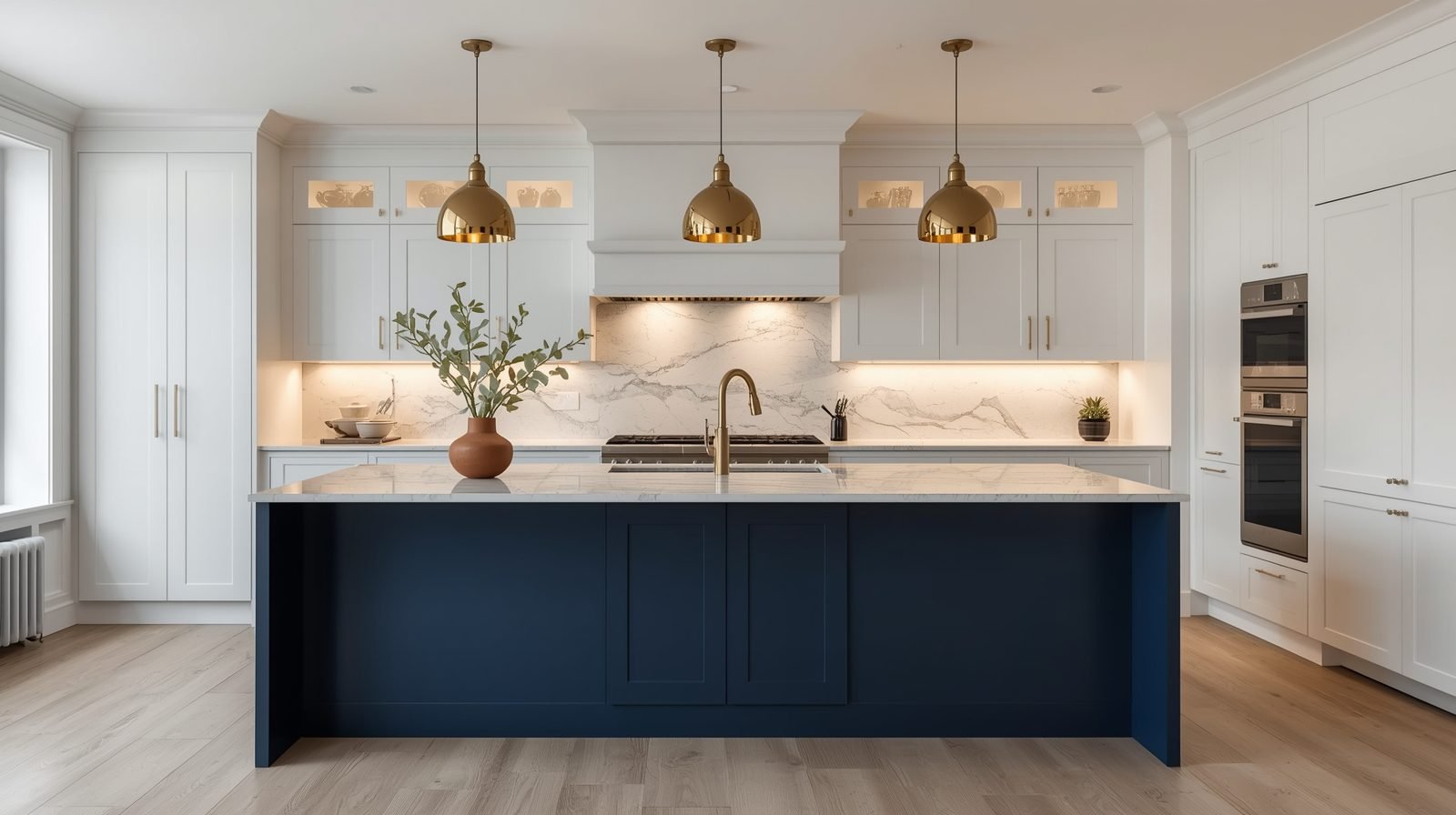
There are few more timeless design pairings than the contrast two tone kitchen island different color from cabinets, which is why two-tone kitchen islands have been one of the most considered — and visually exciting —palettes in today’s modern kitchens. Homeowners are no longer willing to commit to one look across the board. Instead, they’re craving contrast, personality, and a greater sense of the personally custom-designed. Whether you are renovating a kitchen or planning a new build, the approach allows you to gain depth, gives prominence to your island as a focal point, and personalizes your space without overpowering it.
This post covers everything you need to know about — whether it works, picking the right color combinations and design principles, as well as material finishes, lighting, and style ideas shared by the best interior designers in business. It is elegantly written and straightforward, natural and informative, with advice you can use right now to explore more kitchen design guides.
The Appeal of a Two-Tone Kitchen Island
Reasons are Below Why Designers Use a Two-Tone Kitchen Island
A two tone kitchen island different color from cabinets becomes the heart of a room, often serving as both a place for cooking and gathering or eating, and sometimes even working. Pick it an accent color to separate it visually from the cabinets, leaving you with the start of a subtle but meaningful hierarchy.
Here’s why the approach is so powerful:
- Brings Contrast: A contrasting island shade adds interest and drama to the space.
- Establishes a Centerpiece: Your eye is naturally drawn to the island, making it the focus of the room.
- Defines Zones: In open floor plans, color helps the kitchen maintain a distinct space.
- Comes With Customization: Provides the “designer touch” with even low-cost, clean materials.
- Favors Practicality: Darker island stains conceal scuffs; lighter cabinets lighten up the room.
- Blends Modern And Classic: Compatible with farmhouse, coastal, minimalist, transitional, and traditional kitchens.
A two-tone kitchen island that’s a different color than the cabinets will serve function as well as personality without overpowering the overall design.
Picking the Perfect Colors for Two-Tone Kitchen Islands
Work Your Way Out From the Cabinet Color First
The neighboring cabinets establish the base note. The color of them is what makes your island for the most part bold or subtle.
Most homeowners start with:
- Warm whites
- Soft grays
- Cream or almond hues
- Wood finishes
- Dusty blues
- Earth-tone greens
- Natural oak or walnut
Once you know the color or colors of your cabinets and what shade of gray you prefer, it is time to select your island’s color.
Trending Color Techniques For Two-Toned Hair Styles
Here are the designer-overrules to a balanced combination often used, along with expert insights from leading interior designers that support these color strategies:
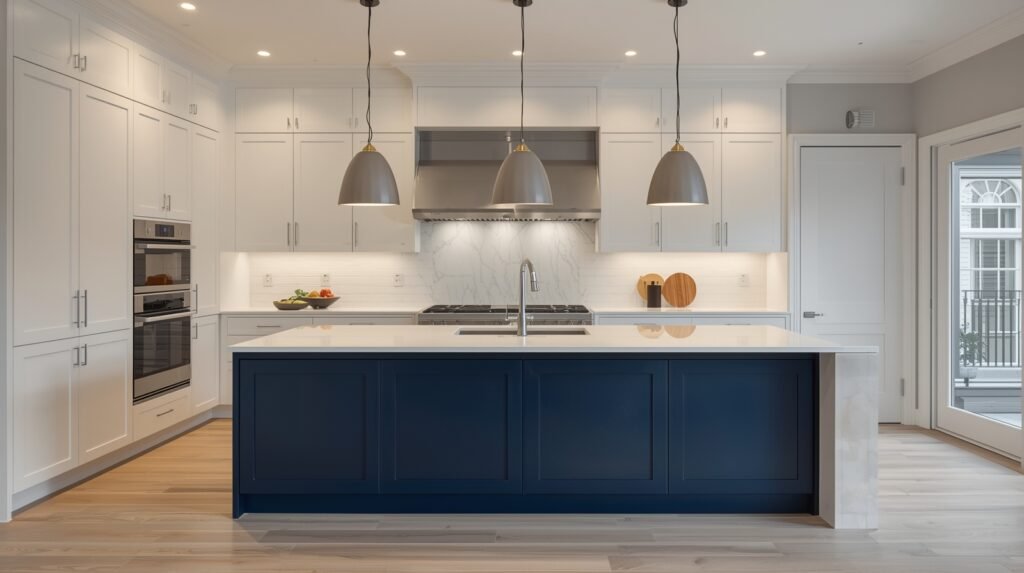
1. Light Cabinets + Dark Island
This is the most popular combination. Light cabinets ensure the kitchen feels open, while a darker island grounds the design.
Common combinations:
- White cabinets + navy island
- Cream cabinets + charcoal island
- Pale gray cabinets + forest green island
- White cabinets + espresso island
2. Dark Cabinets + Light Island
More rare, but so impactful when executed intentionally. Works best in large kitchens.
Examples:
- Black cabinets + oak island
- Espresso cabinets + matte-white island
3. Painted Cabinets + Natural-Wood Island
Provides warmth, texture and a more naturalistic appearance.
Example:
- Soft-gray cabinets + natural walnut island
4. Wood Cabinets + Painted Island
Well designed when you want a touch of color without repainting each everything.
Example:
- Almond wood cabinets + sage green island
5. Tone-on-Tone Categories
Opting for various shades of the same color family on the island and cabinets helps the design feel more connected without being matchy.
Example:
- Light gray cabinets + deep slate island
Whatever pallette you select, make the two tone kitchen island different color from cabinets look deliberate, not like a mistake.
The Design Principles of the Two-Tone Island that Works
Balance and Proportion
When just two hues, the kitchen should feel visually balanced. A statement island should not compete with the rest of the room.
Follow these guidelines:
- If your cabinets are intricate or heavily detailed, select a simple island color.
- Use a deeper or richer island shade if your cabinets are common and simple in look
- For small kitchens, softer contrast works better.
- Bigger kitchens can handle strong contrasts like navy, olive, or black.
Cohesiveness Through Repetition
To make sure the mixed colors feel harmonic, repeat the color of an island elsewhere — light fixtures, bar stools, open shelves or even hardware.
This is an organic way to bring the two-tone design together.
Countertops and Two-Tone Color Balanced
For the look, your choice of countertop can make or break.
Tips:
- If you like a unified design, then go for the same countertop on both the cabinets and the island.
- If you have two countertops, make one more serene and the other just a tad voicey.
- White or pale stone counters combine well with dark island colors.
- Warm-toned wood counters play up the painted islands.
Material and Finish Decisions
Painted Finishes vs. Stain Finishes
A two tone kitchen island different color from cabinets, typically uses a painted finish, but you can achieve the same results with stained woods as well.
Painted
- Offers unlimited color options
- Clean, modern look
- Works well in contemporary or transitional kitchens
Stained
- Shows the natural grain
- Adds warmth
- Works in coastal, farmhouse, or rustic styles
Mixed
- Painted cabinets + stained island creates perfect balance
- Stained cabinets + painted island bring more color diversity
Matte, Satin, or High-Gloss?
Finish choice influences the mood:
- Matte: Modern, calm, minimalistic
- Satin: Most popular, durable, subtle shine
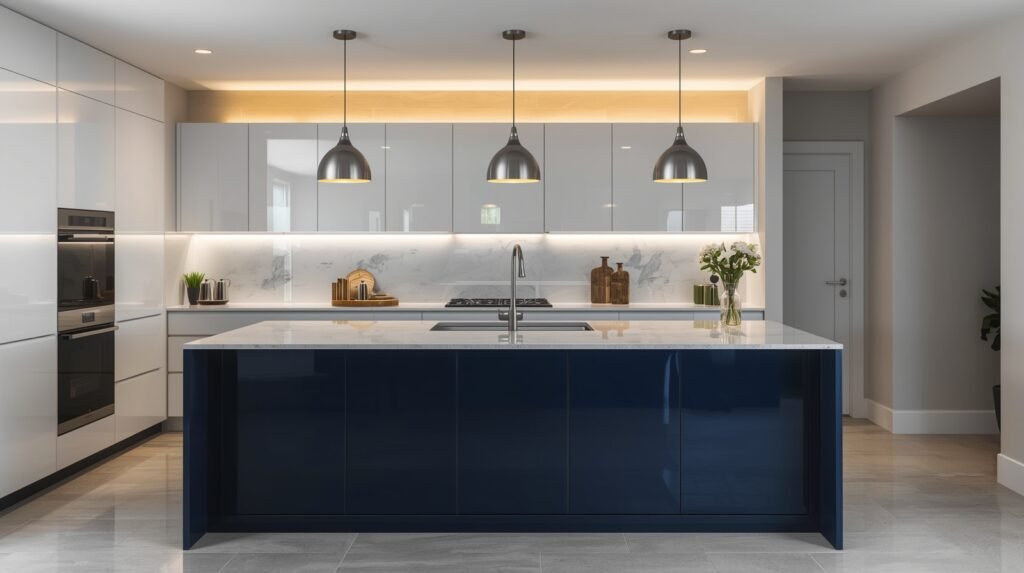
- Gloss: Reflective and bold, works in ultra-contemporary kitchens
For a two tone kitchen island different color from cabinets, satin finishes generally blend well with various kitchen styles.
How to Make the Two-Tone Look Feel Natural
Coordinate With Flooring
How your two tone kitchen island different color from cabinets interacts with the rest of the room will be affected by your flooring’s undertone — cold, warm or neutral.
- Rich greens, navy and charcoal complement warm wood floors.
- Opt for warm neutrals or earthy greens on your island over cool tile floors.
- For gray floors, nearly any color works, but ensure undertones match.
Use Lighting to Highlight the Island
Lighting changes how colors appear. To make the island truly shine:
- Hang pendant lights directly above the island.
- Use warm bulbs for wood tones and rich paint colors.
- Use neutral-white lights for crisp whites and grays.
- Consider under-counter LED strips to create depth.
The better your lighting, the stronger your visual impact.
Practical Tips for Homeowners
Test Colors in Real Light
Paint swatches can be misleading. Apply samples on the island and cabinets to see:
- Daylight appearance
- Evening light tone
- Shadow placement
- Reflection from countertops
Keep Maintenance in Mind
Dark islands hide stains but reveal dust. Lighter islands brighten the space but may require touch-ups.
Materials to consider:
- Hardwood
- MDF
- Plywood core
- High-quality paint
- Durable topcoat for moisture resistance
Work With Your Kitchen Layout
A two-tone island works best when the layout allows it to stand out. For smaller spaces, opt for softer contrast like:
- Gray + white
- Beige + taupe
- Light blue + dusty navy
Large kitchens can explore deeper colors like:
- Hunter green
- Black
- Dark walnut
- Midnight blue
Two-Tone Kitchen Island Design Ideas
1. Coastal Breeze Look
White cabinets with a light sea-blue island, paired with natural-wood stools.
2. Rustic Modern Blend
Natural oak contrasting with a charcoal island for warmth and structure.
3. Minimalist Contrast
Clean architectural look of soft-gray cabinets against a deep-slate island.
4. Warm Traditional Style
Cream cabinets with a walnut-stained island for some depth dimension.
5. Contemporary Drama
Matte-white cabinets and a jet-black island, punctuated with brass fixtures.
You’ll see with each one how a two-tone kitchen island, a contrasting color to cabinets, can radically change the entire room.
Common Mistakes to Avoid
- Selecting colours that ignore the floors
- Playing clashing undertones (warm against cool can clash, too)
- Overloading the space with too many accent colors
- Forgetting to repeat the island color elsewhere
- Picking a bold island color in a very small kitchen without balancing elements
Being mindful of these helps you achieve a well-rounded design.
Conclusion Thoughts
two tone kitchen island different color from cabinets, doesn’t just look fabulous; this is a design idea that adds a sense of brightness, efficiency, and visual dynamism to the room. Whether your style is modern, classic, coastal or transitional, the approach gives a custom-built look without getting too fussy.
By taking your pick of colors with care, minding undertones and picking materials that play well together — and also managing contrast, incorporating smart lighting — you can make an island an eye-catching focal point that feels both natural and purposeful. Turn to this guide to build a kitchen that balances your personal style with timeless taste.
One thought on “Two Tone Kitchen Island Different Color from Cabinets for modern home: A Ultimate Complete Guide 2026”
Comments are closed.