
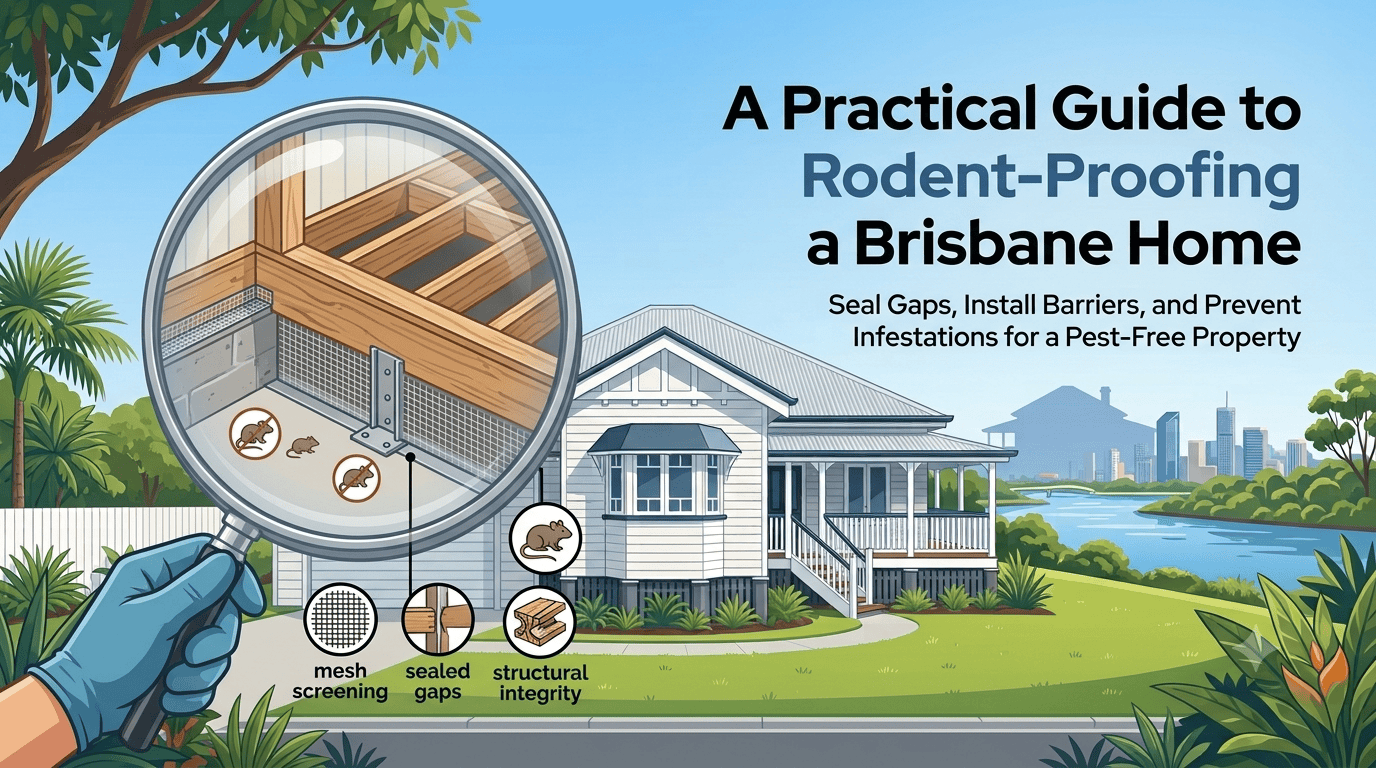
Rats and mice enter homes in search of food, water and shelter. They can squeeze through surprisingly small openings and may establish nests in roof voids, wall cavities, garages, sheds and stored belongings. Once established, rodents can contaminate food, damage materials and create persistent noise and odour problems. A practical rodent plan combines inspection, exclusion, sanitation and monitoring.
Look for signs before sealing everything
Common signs include droppings, gnaw marks, shredded nesting material, greasy rub marks, disturbed food packaging and scratching sounds at night. Check the roof space, garage edges, pantry, hot-water areas and places where plumbing or electrical services enter the building. It is important to understand whether rodents may already be inside before sealing access points, because trapped animals can die in inaccessible spaces.
Inspect the roofline and exterior
Roof gaps, broken tiles, damaged eaves, unscreened vents and openings around cables can provide access. Branches that touch or overhang the roof may act as pathways. At ground level, check door gaps, pipe penetrations, damaged screens and spaces beneath cladding. Suitable repairs may involve metal mesh, door seals, flashing or building work. Soft foam alone is often not durable enough where rodents can chew through it.
Manage food sources
Store pantry food, bird seed and pet food in strong sealed containers. Clean spills promptly and avoid leaving pet bowls full overnight. Outdoor bins should have well-fitting lids and should be cleaned when residue builds up. Compost systems, chicken feed, fallen fruit and barbecue grease can also attract rodents. The aim is not necessarily to remove every possible food source, but to prevent reliable and easy access.
Reduce shelter around the property
Dense vegetation, accumulated materials and clutter provide cover. Trim plants away from walls, remove unused items and store firewood or timber off the ground and away from the home. Sheds should be organised so floors and wall edges can be inspected. Cardboard, fabric and insulation can become nesting material, so long-term storage is better in durable containers.
Use traps and baits carefully
Traps can be effective when correctly positioned along travel routes, but poor placement may produce little result. Rodent baits require careful use because of risks to children, pets and non-target animals. Dead rodents may also create odours if they die inside a wall or roof space. A professional can choose secured stations, suitable products and monitoring intervals based on the property and level of activity.
Why follow-up matters
Removing one rodent does not confirm that the entry point or wider population has been addressed. Follow-up checks should look for new droppings, feeding, trap activity and attempted re-entry. Exclusion repairs may need adjustment, especially around moving doors, roof junctions and utility penetrations. Neighbouring food sources and shared building spaces can also influence recurrence.
Getting professional help
Persistent roof noises, repeated sightings or evidence in food areas should be investigated promptly. Brisbane Termite & Pest Control can inspect likely access routes, identify conducive conditions and develop a rodent management plan that combines treatment with practical prevention. This integrated approach is generally more reliable than repeatedly placing products without addressing why rodents are entering.
Conclusion
Rodent-proofing is an ongoing maintenance task rather than a single repair. By reducing food, removing shelter, sealing suitable openings and monitoring for fresh signs, Brisbane households can make their properties far less attractive to rats and mice.