
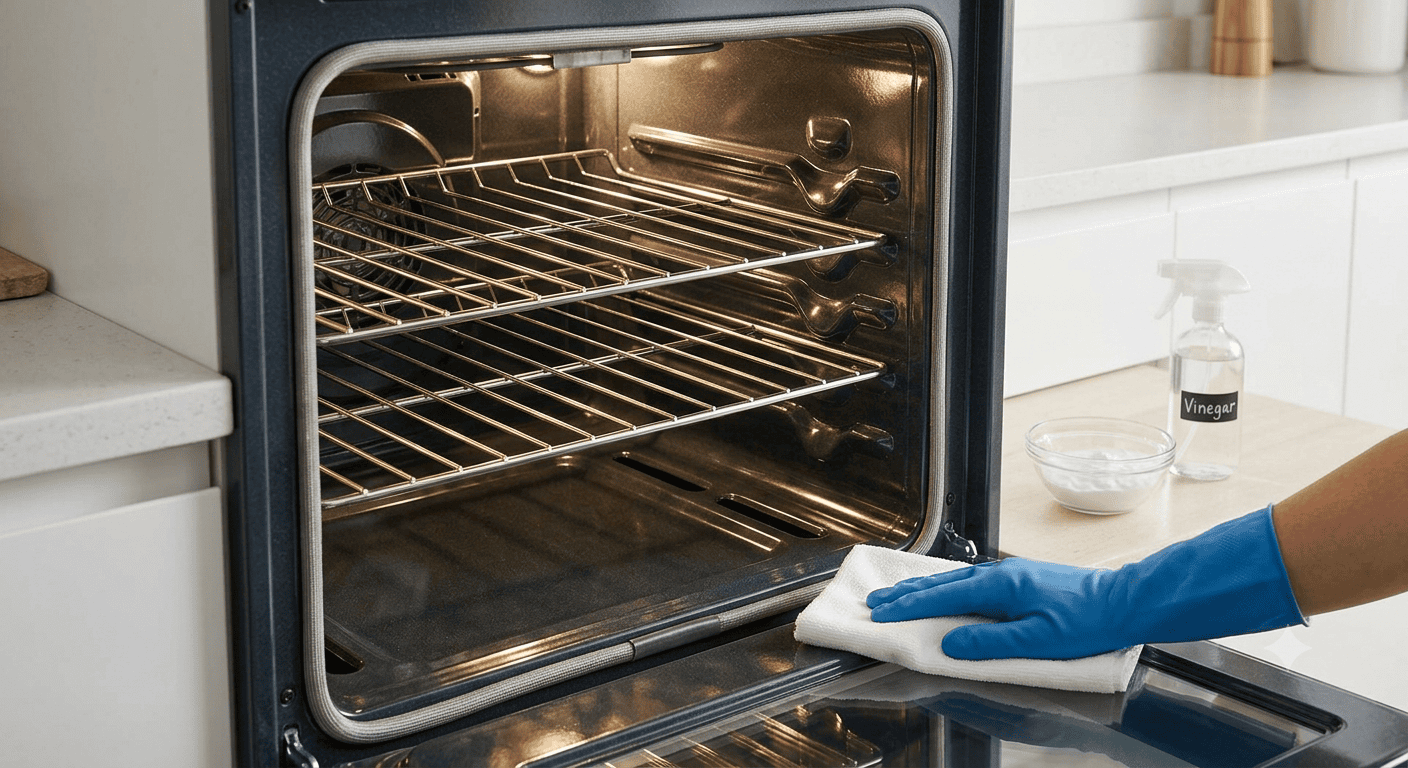
A clean oven not only looks good but works better and smells better too. If you’re finding that your oven is smoking and smelling nasty every time you use it, chances are that you need to know how to clean an oven.
Many people put off cleaning their oven because they think of it as a huge chore. However, if you know how to clean an oven properly it can be done in no time at all. It can even help if you have an oven that cleans itself, knowing how to properly clean it can mean the difference between a quick easy cleaning and a huge hassle! Learning how to clean an oven is important for another reason as well.
If you clean it on a regular basis you’ll find that carbon buildup doesn’t get as bad, making it easier to clean in the long run. Cleaning your oven on a regular basis will also keep it working at its best.
Why Cleaning Your Oven Is Important
Understanding how to clean an oven starts with recognizing why routine cleaning matters.
Every time food spills, grease splatters, or sauces overflow, residue can bake onto the oven’s interior. As this buildup hardens, it may produce smoke, unpleasant odors, or uneven cooking temperatures. In severe cases, accumulated grease can even become a fire hazard.
A clean oven offers several advantages:
- More consistent cooking temperatures
- Reduced smoke during baking or roasting
- Better food flavor without burnt odors
- Improved energy efficiency
- Easier appliance maintenance
- Longer appliance lifespan
Cleaning your oven regularly also allows you to inspect heating elements, door seals, and oven racks for signs of wear before small issues become expensive repairs.
Gather the Right Cleaning Supplies
Before beginning how to clean an oven, collect everything you’ll need. Having the proper supplies nearby makes the process smoother and helps prevent unnecessary interruptions.
Some commonly used cleaning materials include:
- Warm water
- Mild dish soap
- Baking soda
- White vinegar
- Microfiber cloths
- Non-abrasive sponge
- Plastic scraper for stubborn residue
- Rubber cleaning gloves
- Spray bottle
Avoid using steel wool or harsh metal scrubbing pads unless the manufacturer specifically recommends them. Abrasive tools may scratch the oven’s interior coating or damage glass surfaces.
Always consult your appliance’s user manual before using commercial oven cleaners, as certain oven finishes may require special care.
Prepare the Oven Before Cleaning
A successful cleaning job begins with proper preparation. One of the most overlooked parts of learning how to clean an oven is taking a few minutes to prepare the appliance safely.
Firstly, ensure your oven is turned off and that it has cooled down sufficiently if it was recently used. It is dangerous to attempt to clean a hot oven as it risks causing burns, and your cleaning product will dry too rapidly. Secondly, remove your oven rack, thermostat, oven trays, pizza stone and any removable attachments.
By removing these elements, it will make it much easier to reach the entire oven interiors.
Before applying any oven cleaner, wipe out any dry debris using a cloth or paper towel. Any dry crumbs or ash will simply mix with the cleaner, creating a muddy residue that may not remove effectively..
A Natural Method to Clean an Oven
Many homeowners prefer natural cleaning methods because they are inexpensive and avoid strong chemical odors. Implementing simple habits like these aligns perfectly with essential home tips designed to make daily household upkeep easier. One of the most popular techniques for how to clean an oven uses baking soda and water.
Make a thick paste using baking soda and just enough water so that it can be easily spread. Then, slather the paste on the interior surfaces of your oven, except the heating elements (always check your oven manufacturer’s recommendations). It is particularly important to apply it generously on the spots where you have built up baked on grime.
It won’t be abrasive, and the paste will gradually eat away at any stubborn deposits.
Leave the baking soda paste in your oven overnight or at least for several hours. This gives the baking soda the opportunity to soften all the hardened grease, making it easy to scrape off.
Common Areas That Need Extra Attention
When learning how to clean an oven, it’s easy to focus only on the oven floor. However, grease and food residue often accumulate in several other locations. Consulting trusted step-by-step oven cleaning guides can help you identify these hidden zones before they cause performance issues.
These areas commonly require additional care:
- Interior side walls
- Oven ceiling
- Door glass
- Door frame and hinges
- Bottom corners
- Rack supports
- Vent openings (where accessible)
Cleaning these sections carefully helps restore the oven’s appearance while preventing lingering odors caused by hidden food buildup.
Removing Stubborn Grease and Burnt-On Residue
Once the cleaning solution has had enough time to break down stubborn grease and baked-on residue, the next step in how to clean an oven is to gently remove the loosened debris without scratching or damaging the oven’s interior. Taking your time during this stage helps achieve better results.Rubbing with excessive force may scratch protective coating or even permanently disfigure the enamel surface. Gently remove the baking soda paste with loosened grease with a damp microfiber cloth or a nonabrasive sponge.
Use a plastic scraper to gently lift any tough, sticky residue without damaging the oven walls.
In case of any persistent baking soda film, spritz some white vinegar onto the oven walls. The vinegar reacts with baking soda to further loosen it and help you to rub everything off with a damp cloth.
Don’t Forget the Oven Racks
When learning how to clean an oven, many people overlook the racks, even though they collect grease, food drips, and carbon deposits over time.
Soaking is the best first step for cleaning your racks: Fill a basin with warm water and add a few drops of dish soap. Let the racks soak until the grease has had time to dissolve. When they’re ready, scrub away any remaining residue with a soft sponge or a nylon brush.
Rinse and dry the racks before replacing them into the oven to ensure that you avoid a build-up of moisture that might discolour or rust their surfaces.
How Often Should You Clean Your Oven?
The ideal cleaning schedule depends on how frequently you cook. Regular maintenance prevents grease from becoming difficult to remove and helps your oven perform more efficiently.
| Oven Usage | Recommended Cleaning Frequency |
| Daily cooking | Every 1–2 months |
| Several times a week | Every 2–3 months |
| Weekly cooking | Every 3–4 months |
| Occasional use | Every 6 months or as needed |
In addition to deep cleaning, wiping up fresh spills after the oven has cooled can significantly reduce long-term buildup.
Common Mistakes to Avoid
Understanding how to clean an oven also means avoiding habits that can damage the appliance or make cleaning more difficult later.
Some common mistakes include:
- Cleaning the oven while it is still hot.
- Using sharp metal tools that may scratch the interior.
- Spraying cleaner directly onto heating elements when not recommended.
- Ignoring grease spills until they become hardened.
- Forgetting to rinse away cleaning residue before using the oven again.
- Reinstalling damp oven racks before they have fully dried.
Avoiding these mistakes helps maintain both the appearance and performance of your oven for years to come.
Conclusion
Knowing how to clean an oven is an essential household skill that can improve cooking results, eliminate unpleasant odors, and extend the life of your appliance-Natural cleaning. Use natural solutions with baking soda or cleaners approved by the manufacturer to keep the grease from accumulating. However, remember that to keep the grease and burnt-on residue from mounting to an insurmountable point, you will have to develop habits like wiping the spills immediately after use and perform an occasional deep cleaning.
Frequently Asked Questions
1. What is the easiest way to clean an oven?
One of the easiest ways is to use a baking soda paste and then white vinegar to remove the greasy film and baked-on food to wipe the desired place clean.
2. Is it possible to use baking soda for cleaning the oven?
Yes, it is possible, since baking soda effectively removes fats, and it does not harm most of the materials of the inside of the oven.
3. How long do I need to leave the baking soda in my oven?
To achieve the best result, you need to leave the baking soda paste overnight or for several hours.
4. Is it possible to use commercial oven cleaners?
Yes, it is possible, but make sure that the cleaner is suitable for your oven’s material and technology.
5. How often do I need to clean the oven?
The ideal cleaning schedule depends on how frequently you use your oven. As a rule, it is recommended to clean it every two or three months. However, if you use your oven frequently, it is better to clean it more often.
6. Is it possible to put oven racks in the dishwasher?
It depends on the material of your oven racks. Some materials can be damaged if they are put in the dishwasher. Check the manual of your oven to see whether it is possible to use the dishwasher for cleaning.
7. Why does my oven smell after cleaning?
After cleaning, it may smell because there may be some traces of cleaning means left. Wipe the inside of the oven with running water and let it dry.